Persian Cat Births Usually Start After Midnight
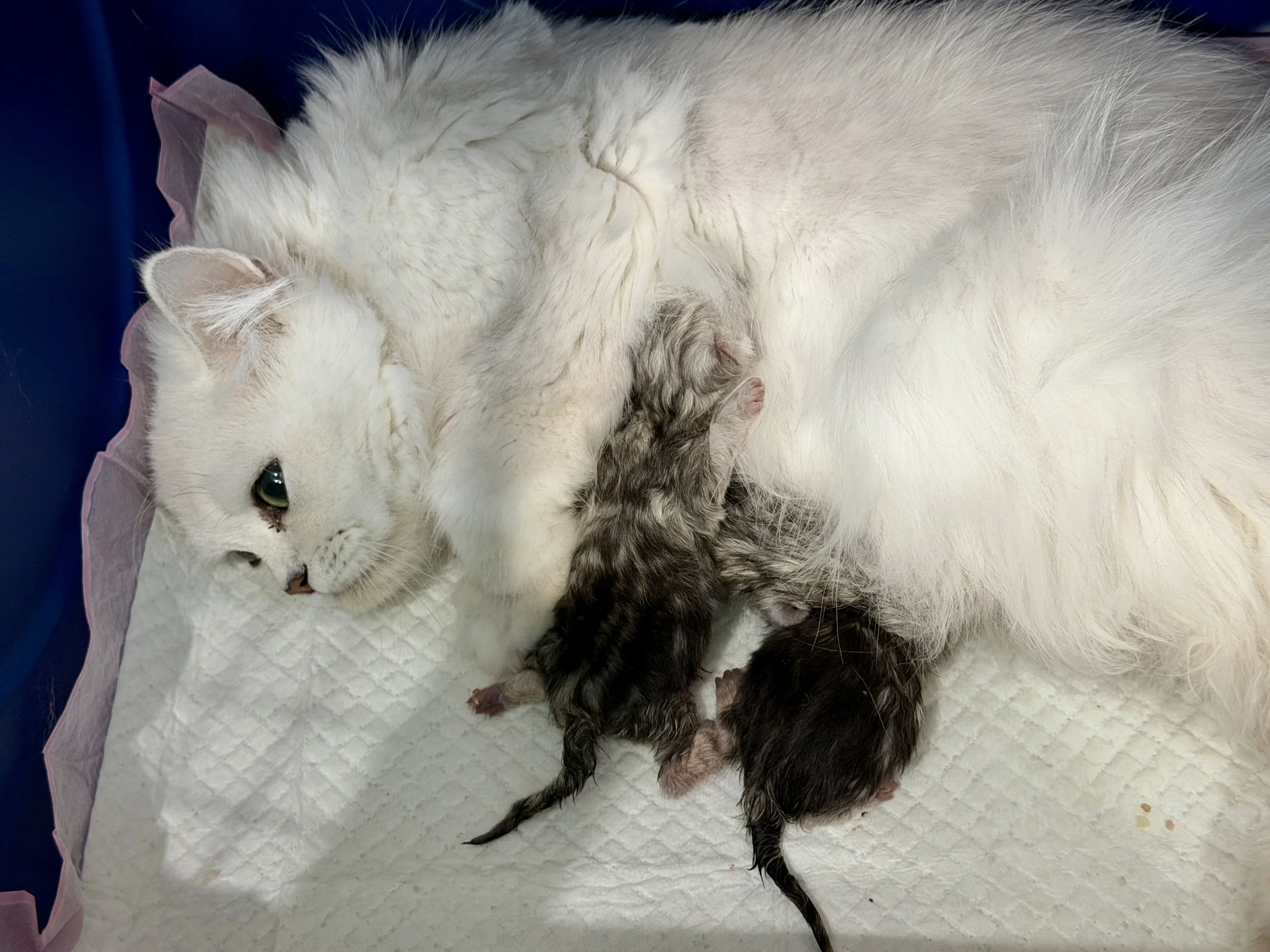
White persian queen shortly after giving birh — January 2026
Talking from experience, I can say that most Persian cat births start in the middle of the night. That’s been consistent enough over the years where I need to plan for it. The Dreamdoll nursery house is quiet, lights low, everything already in place. By then, I already know sleep isn’t happening.
With Persian queens, the signs show up before the clock says they should. In the days leading up to labor, I’m watching behavior more than dates. Changes in posture. How often she’s nesting. Whether she’s pacing or glued to my side. Here’s a list of four signs professional breeders look out for to know when their queen is nearing labor:
Clingy or unusually watchful of you
Many Persian queens either glue themselves to their person or keep you in constant sight. The eye contact changes — longer, more intent. It’s subtle, but once you’ve seen it, you don’t miss it.Drop in appetite within 12–24 hours
Not a full refusal, but she’ll pick at food or walk away mid-meal. With Persians, this shift often means labor isn’t days away anymore — it’s close.Restlessness paired with long pauses
She’ll pace briefly, then stop and stand still, or lie down and get up repeatedly. These pauses are often early contractions, even if they’re not obvious yet.Looks to settle down
She stops roaming and starts committing to one or two spots. Less experimenting, more settling. Movements become deliberate, almost careful, and she’ll reposition frequently like she can’t quite get comfortable.
Pre-Labor Care for a Persian Queen
Once I can tell she’s close, everything else fades away. I stay right with her. Her nest is set up exactly how she likes it—same blankets, same scents, nothing new. Persians at this stage hate surprises, and even small stress can slow things down, so I make sure she feels completely at ease.
I boost her nutrition slowly—no sudden changes. Supplements get tweaked depending on her condition, how big the litter is, and what past deliveries have looked like. There’s really no one-size-fits-all with Persians. Every queen has her own rhythm, and you only learn it by paying close attention, day after day.
Before labor, I shave her belly and bottom. It’s just something I do ahead of time so I’m not dealing with fur when things start moving. It keeps the area cleaner, helps the kittens find their way faster, and makes a long Persian delivery a little easier to manage. Anyone who’s been through one knows how quickly small things like that start to matter.
Persian Labor and Delivery Realities
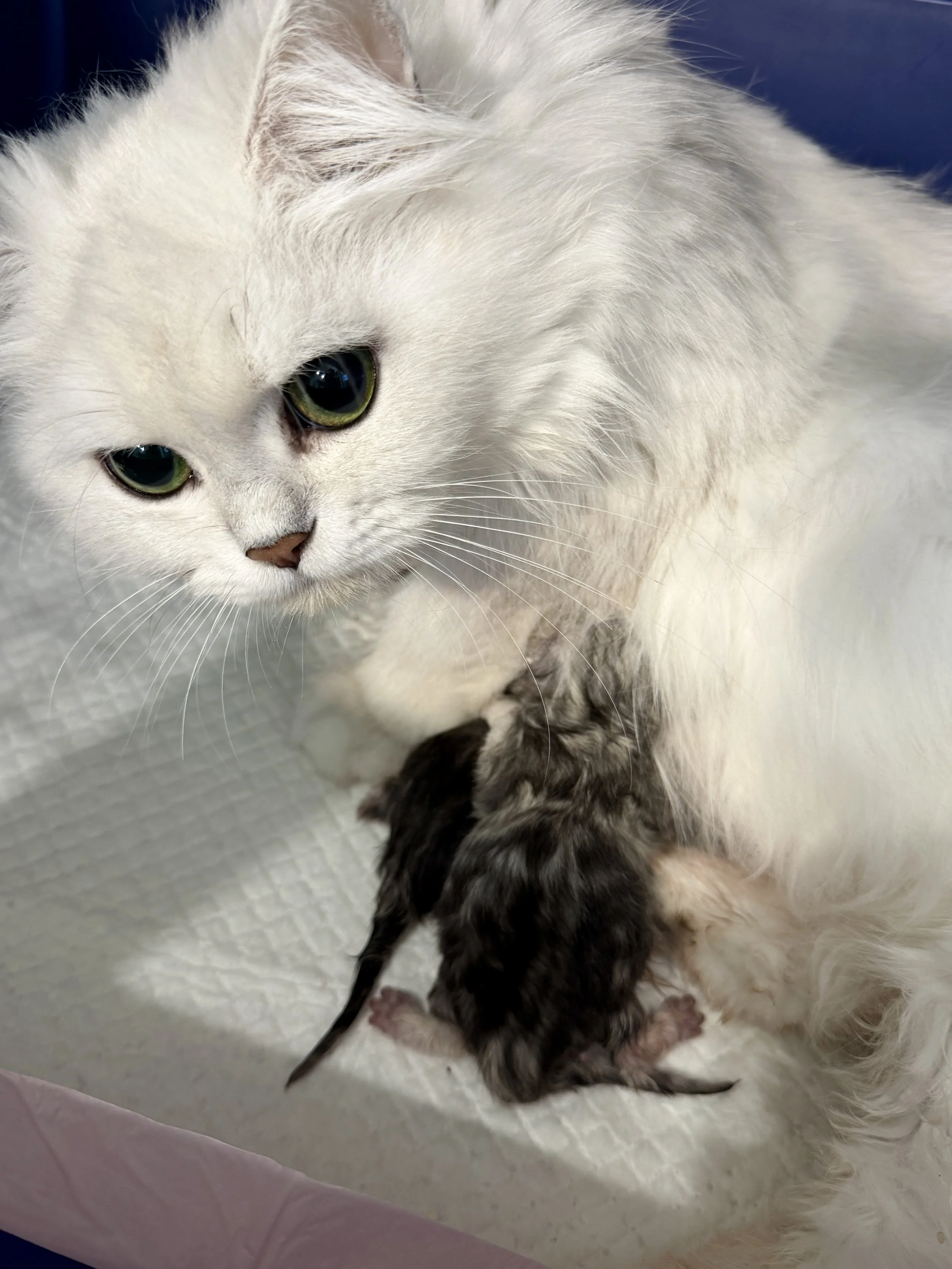
Persian labor is rarely quick. Large heads, compact bodies, and frequent breech presentations mean you stay put. I sit beside her the entire time. No stepping away. No distractions. You learn when to let a contraction work and when a kitten needs help moving through.
Many Persian queens don’t open sacs or chew cords. That’s expected. As each kitten arrives, I’m already clearing airways, stimulating, and managing cords. Everything is efficient and calm. Hesitation costs time, and time costs kittens.
Even with experience and preparation, losses still happen. Sometimes during delivery. Sometimes hours later. That never becomes normal, but you do learn how to keep going when it happens. With professional care, these incidents are greatly reduced.
Emergency C-Sections in Persian Cats
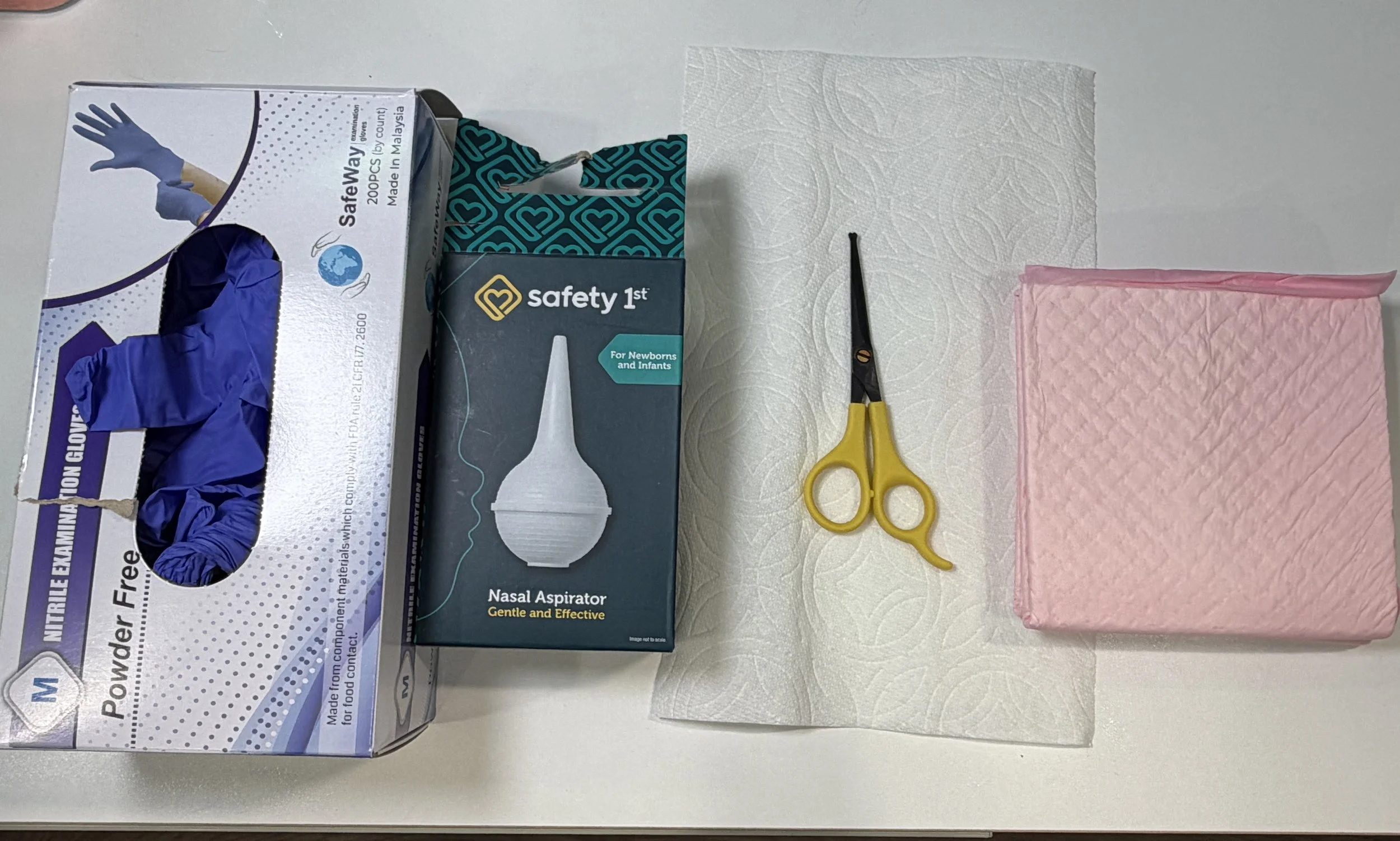
Emergency instruments: powder-free examination gloves, nasal aspirator, scissors, cloth.
Emergency C-sections are part of breeding Persians. Sometimes there’s a slow build-up—weak contractions, stalled progress. Other times it turns urgent without much warning. Those nights are long and heavy, and they stay with you.
This is the part of Persian breeding most people don’t see. The quiet hours. The constant assessment. The responsibility of making decisions in real time while a queen trusts you completely. There’s nothing performative about it. Just presence, experience, and staying steady until the job is done.
Hope you’ve learned something new about how we do things at Dream Doll Persians! Feel free to browse our other blogs or give us a call at 858-229-5421.